Hair loss and cancer treatment
Hair loss from chemotherapy and other cancer treatments: why it happens, cold caps, coping with the change, and whether hair grows back.
Written and reviewed by Shuna Hammocks, consultant trichologist (IoT no. 10060)
Last reviewed
Why does cancer treatment cause hair loss?
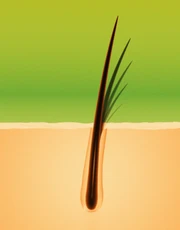
Chemotherapy targets cells that divide quickly, like cancer cells. Hair follicles are among the fastest-growing cells in the body, so they are affected too. Whether you lose hair, and how much, depends on the medicines, the dose and how your body responds.
Losing your hair can feel like the most visible sign of being ill, at a time when so much else is out of your control. Your feelings about it are completely valid, and you don’t have to face it alone.
The short answer
Many cancer treatments cause hair loss, but not all, and your oncology team can tell you what to expect from yours. For most people, hair grows back after chemotherapy, though it can look and feel different at first.
Which cancer treatments cause hair loss?
Not every treatment causes hair loss. Your oncologist or nurse is the best person to tell you about your own treatment.
Chemotherapy
Can cause thinning or complete hair loss, sometimes including eyebrows, eyelashes and body hair.
Radiotherapy
Only affects hair in the area being treated. If the head is treated, hair may grow back thinner, or not at all.
Hormone therapy
Some hormone treatments, such as those for breast cancer, can cause gradual thinning.
Targeted and other treatments
Some newer cancer medicines can change hair texture or cause thinning.
Can a cold cap stop hair loss during chemo?
Scalp cooling, often called a cold cap, can reduce hair loss for some people having some kinds of chemotherapy. It isn’t suitable for every treatment or every type of cancer, and it isn’t offered at every hospital.
Your oncology team is the right place to ask whether it’s an option for you, and what it would involve.
Coping with losing your hair
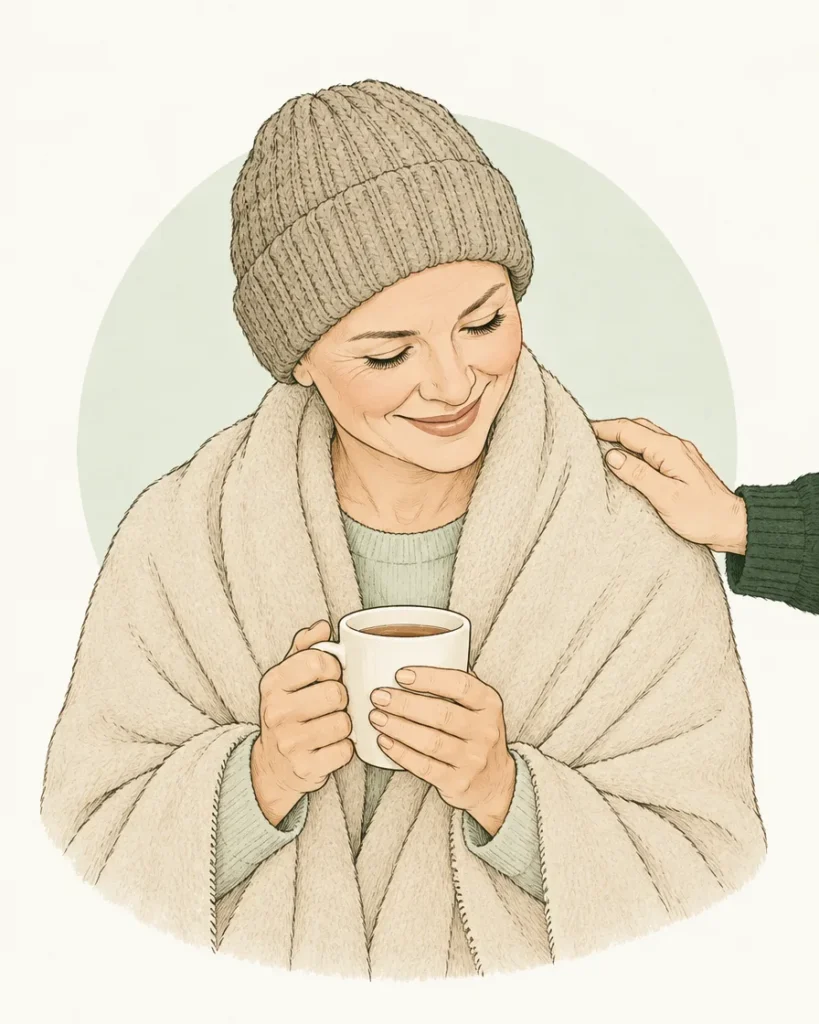
Some people feel ready for it; others find it one of the hardest parts of treatment. Both are normal, and how you feel can change from week to week.
- Many people cut their hair short before it falls, so the change feels less sudden and more in their control.
- Wigs, scarves and hats can help you feel like yourself. Ask your team about an NHS wig.
- Talk to the people around you, and to your cancer team, if it’s affecting how you feel.
Does hair grow back after chemo?
Yes, for most people. New hair is often soft and fine at first, and it may come back a different colour or texture, often curlier. Eyebrows and eyelashes usually grow back too.
Occasionally, especially after certain medicines, hair stays thinner than before. This is called persistent chemotherapy-induced alopecia.
When regrowth isn’t as expected
It’s worth having your hair and scalp looked at if:
- your hair isn’t growing back as your team expected
- it’s growing back patchy or much thinner than before
- you’re having hormone therapy and your hair is thinning
- your scalp is sore, itchy or flaky
For anything that worries you during treatment, speak to your oncology team first.
How I can help
I see people before, during and after cancer treatment. At a consultation in Forest Row we spend about an hour together. I listen to what you’re going through, take a full history and look at your hair and scalp closely with a dermascope.
You leave knowing what is happening to your hair and what to expect at each stage. At your consultation I’ll always check that anything I suggest fits with your treatment.
Questions about hair loss and cancer treatment
If yours isn’t here, send me a message and I’ll get back to you.
When does hair start falling out after chemo?
It depends on the medicines and on the person. Your cancer team can tell you what to expect with your treatment.
Does hair grow back after chemo?
Yes, for most people, though it may be finer, curlier or a different colour at first. Occasionally it stays thinner than before.
Does a cold cap work?
It can reduce hair loss with some chemotherapy medicines, but not all. Ask your oncology team whether it suits your treatment.
Why is my hair growing back curly after chemo?
Chemotherapy can change how the follicle shapes the hair for a while. Most people find their hair slowly returns to its old texture.
Does radiotherapy cause hair loss?
Only in the area being treated. If your head is treated, hair may grow back thinner, or not at all, so ask your team what to expect.
Let’s find out what’s going on
Book online at a time that suits you. If you have a question first, send me a message.