Cradle cap
Crusty, greasy patches on your baby’s scalp? What cradle cap is, what causes it, whether it’s harmful and when to see a GP.

Written and reviewed by Shuna Hammocks, consultant trichologist (IoT no. 10060)
Last reviewed
What is cradle cap?
Cradle cap usually appears in the first few months of life. You see yellow, white or brownish scales on the scalp, which can be greasy or dry and crusty, sometimes with a little redness underneath. It can spread to the eyebrows, behind the ears and the nappy area.
Its medical name is infantile seborrhoeic dermatitis: it’s the baby version of seborrhoeic dermatitis. It isn’t itchy or painful, it isn’t catching, and it has nothing to do with how often you bath your baby.
It can still be upsetting to see, especially in baby photos, and many parents worry they’ve done something wrong. You haven’t.
The short answer
Cradle cap is greasy, yellowish, crusty patches on a baby’s scalp. It’s very common, harmless, and doesn’t usually bother the baby. It normally clears up on its own, and your health visitor or pharmacist can advise on gentle care in the meantime.
What causes cradle cap?
The exact cause isn’t known. It’s thought to be linked to:
- Active oil glands in the first months
- A natural yeast on the skin
- Skin cells building up rather than shedding
It isn’t caused by poor hygiene, an allergy or an infection.
Is it cradle cap or something else?
Cradle cap doesn’t usually itch. If your baby is scratching or rubbing their head, has red, dry, itchy patches elsewhere on the body, or the skin is weeping, it may be eczema.
In older children, a scaly scalp with broken hairs or patches of hair loss is more likely to be scalp ringworm, which needs treatment from a GP.
How to get rid of cradle cap
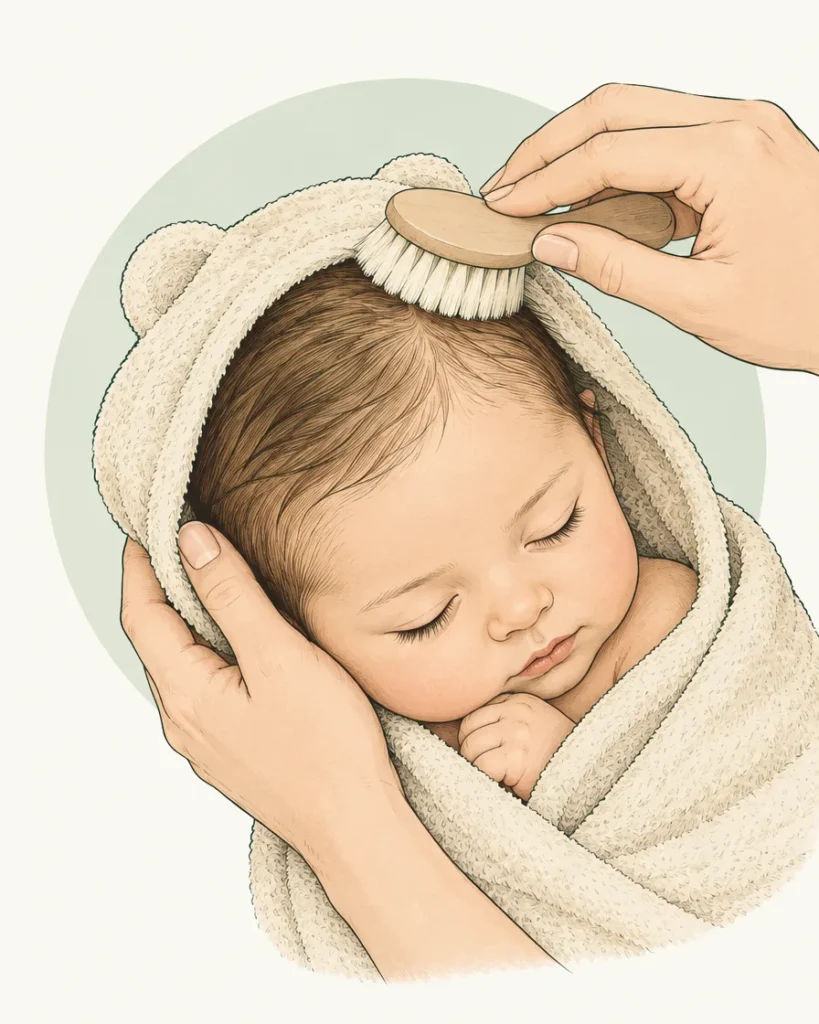
Cradle cap usually goes on its own, without any treatment. Gentle care can help it clear, and your health visitor or pharmacist can advise on what’s suitable for your baby’s skin.
Try not to pick at the crusts, as it can cause bleeding and infection, and check before using adult, anti-dandruff or medicated products on a baby. It can come back, which is normal and nothing to worry about.
When to see a GP
Speak to your GP or health visitor if:
- the crusts don’t improve after a few weeks of home care
- it spreads to other parts of the body
- the skin looks red, swollen, hot, or is bleeding or leaking fluid
- your baby seems itchy or uncomfortable
- your baby is unwell, or you’re worried
A pharmacist can also advise.
Cradle cap in older children
Most babies grow out of cradle cap, though it sometimes lasts longer or comes back in toddlers.
If an older child has a persistently flaky, scaly or itchy scalp, it’s worth finding out what it is, as other scalp conditions can look similar and are treated differently.
I see children with a parent, and cover other children’s hair and scalp problems on a separate page.
Do you need a trichologist?
Not for most babies. Cradle cap is harmless and usually clears with gentle care at home, with your health visitor, pharmacist or GP if needed.
I see older children whose scalp is still scaly or flaky, or where the diagnosis isn’t clear. At a consultation in Forest Row I examine the scalp gently with a dermascope, at a pace that suits your child, and you leave knowing what it is and what to expect.
Questions about cradle cap
If yours isn’t here, send me a message and I’ll get back to you.
Is cradle cap harmful?
No. Cradle cap is harmless and doesn’t usually bother your baby. It’s a cosmetic problem that clears on its own.
How long does cradle cap last?
It varies from baby to baby. It usually clears on its own, and most babies grow out of it.
Can cradle cap cause hair loss?
Some hairs may come away with the scales, but they grow back. Cradle cap doesn’t damage the hair follicles.
Is cradle cap caused by not washing my baby’s hair?
No. It isn’t caused by poor hygiene, and it isn’t anything you’ve done.
Can adults get cradle cap?
Adults don’t get cradle cap, but they can get seborrhoeic dermatitis, which is the same condition in adults.
Let’s find out what’s going on
Book online at a time that suits you. If you have a question first, send me a message.