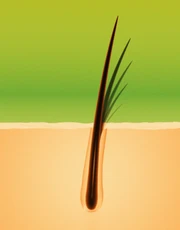
Dandruff
What dandruff is, what causes it, the symptoms, why shampoos often stop working and when to get your scalp checked.

Written and reviewed by Shuna Hammocks, consultant trichologist (IoT no. 10060)
Last reviewed
What is dandruff?
Your scalp sheds dead skin all the time, usually in pieces too small to see. With dandruff, the skin renews itself faster than usual and the dead cells clump together into flakes you can see in your hair and on your shoulders.
It’s one of the most common scalp problems after puberty, and it tends to come and go. Its medical name is pityriasis capitis. At the milder end, dandruff and seborrhoeic dermatitis are part of the same condition.
Dandruff is rarely serious, but it can knock your confidence. Many people tell me they avoid dark clothes, check their shoulders all day or feel embarrassed at the hairdresser.
The short answer
Dandruff is white or grey flakes of skin from the scalp, often with some itching. It’s linked to the scalp over-reacting to a yeast that lives on everyone’s skin, not to poor hygiene. It isn’t harmful or catching, and once the cause is understood it can almost always be controlled.
What causes dandruff?
There’s rarely just one cause. These are the things that most often start dandruff off or make it worse:
- A natural scalp yeast called Malassezia
- An oily scalp
- Cold weather and central heating
- Stress and illness
- Heavy oils and some styling products
Dandruff isn’t caused by poor hygiene, and you can’t catch it from anyone else. Working out which of these is behind your flakes is the first thing I do at a consultation.
Dandruff symptoms
- White or grey flakes in your hair and on your shoulders
- An itchy scalp
- Flakes that are slightly oily rather than powdery
- Flaking all over the scalp rather than in clear patches
- Symptoms that come and go, often worse in winter
Dandruff or dry scalp?
Many people with dandruff think they have a dry scalp, and treat it with oils that can make it worse. The two are easy to confuse, and my page on dry scalp explains how they differ.
Flaking can also come from scalp psoriasis or a reaction to a product, so it’s worth knowing what you really have before spending more on shampoos.
Dandruff treatment: how to get rid of dandruff
Dandruff can’t be cured for good, but it can almost always be controlled. There’s no one answer that suits everyone, because the right approach depends on the cause, your scalp and your hair.
- Confirm it really is dandruff
- Find what makes yours flare
- The right routine for your scalp
- Keep it under control
Which dandruff shampoo?
Shop shampoos work in different ways, and one that suits one scalp can irritate another. That’s why so many people go from bottle to bottle, or find a shampoo that works for a while and then stops. The best one is the one that matches what’s really going on with your scalp.
Severe dandruff and when to get help
If your flakes keep coming back whatever you use, it may not be dandruff at all. It’s worth getting your scalp looked at if:
- the flaking or itching won’t settle
- flaking has spread to your face, ears or eyebrows
- you have thick patches of scale
- you’re losing hair, or have patches of hair loss
See your GP if your scalp is red, hot, weeping or painful, if you feel unwell, or if a child has a flaky scalp with patches of broken hair, which can be scalp ringworm rather than dandruff.
How I can help
Most people I see with dandruff have already spent a lot on shampoos that didn’t work. At a consultation in Forest Row we spend about an hour together. I listen to your experience, examine your scalp closely with a dermascope, and go through your products, washing routine and health.
You leave knowing what you have and what to expect, with a written plan for your scalp. Please bring a list of the products you use and anything you’ve already tried.
Questions about dandruff
If yours isn’t here, send me a message and I’ll get back to you.
Why do I have dandruff?
Dandruff happens when your scalp over-reacts to a yeast that lives on everyone’s skin, so it renews itself faster than usual. An oily scalp, stress, illness and cold weather can all make it more likely.
Can dandruff cause hair loss?
Not directly. Dandruff doesn’t damage the hair follicles. Scratching can break hairs, and a very inflamed scalp can add to shedding, but this recovers once the scalp is calm.
Is dandruff caused by not washing your hair?
No. Dandruff is the scalp over-reacting to a natural yeast. Leaving it longer between washes lets flakes build up, so it can look worse, but it isn’t the cause.
Is dandruff contagious?
No. You can’t catch dandruff from someone else or from sharing a brush.
Why does my dandruff keep coming back?
Dandruff is a long-term tendency, so it often returns when something sets it off again. Finding what triggers yours is the key to keeping it away.
Can stress cause dandruff?
Stress doesn’t cause dandruff on its own, but it often makes it flare.
Let’s find out what’s going on
Book online at a time that suits you. If you have a question first, send me a message.