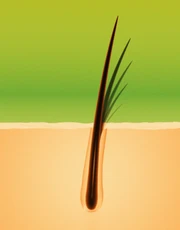
Scalp psoriasis
Raised, scaly patches on your scalp? What scalp psoriasis is, the signs, what triggers flares, hair loss and how a consultation helps.
Written and reviewed by Shuna Hammocks, consultant trichologist (IoT no. 10060)
Last reviewed
What is scalp psoriasis?
Psoriasis is a long-term skin condition. Skin cells are made much faster than normal, and the extra cells pile up into patches called plaques. The scalp is one of the most common places for it, and for some people it’s the only place.
It can be a small patch you can hide under your hair, or it can cover the whole scalp and spread past the hairline onto the forehead, behind the ears and the back of the neck. It tends to come and go, with flare-ups and calmer spells.
Scalp psoriasis is often mistaken for dandruff or seborrhoeic dermatitis, and the approach is different, so it’s worth knowing which you have.
The short answer
Scalp psoriasis causes raised, scaly patches on the scalp, often with itching or soreness. It happens because the immune system speeds up the growth of skin cells, so they build up into thick scale. It isn’t catching. It can’t be cured, but it can be cleared or kept under control.
Signs of scalp psoriasis
- Raised, well-defined patches with thick, silvery-white scale
- Red or pink patches on white skin; on brown or black skin they can look purple, grey or dark brown
- Itching, which can be intense
- Soreness, burning or a tight feeling
- Scale that sticks to the hair, and may crack or bleed if picked
- Patches that spread past the hairline or behind the ears
Scalp psoriasis can affect how you feel as much as how your scalp looks. Many people tell me they dread the hairdresser, avoid dark clothes or feel self-conscious about flakes on their shoulders.
If you’re not sure whether it’s psoriasis or dandruff, scalp conditions explains how the common flaky scalps differ.
If you have psoriasis and painful, swollen or stiff joints, tell your GP, as it can be a sign of psoriatic arthritis.
What causes scalp psoriasis?
Psoriasis runs in families, and it starts when the immune system becomes overactive. It often first appears in the teenage years or early adulthood. It isn’t caused by poor hygiene, and you can’t catch it. These are the things that most often set off a flare:
- Stress
- Infections, such as a sore throat
- Injury to the skin, including scratching and picking
- Cold, dry weather
- Alcohol and smoking
- Some medicines
Never stop a prescribed medicine without speaking to your doctor first.
Scalp psoriasis shampoo
Medicated shampoos can help, but on their own they’re rarely the whole answer. Which one suits you, and how it’s used, depends on how thick the scale is and how inflamed your scalp is.
Many people I see have tried several shampoos and wonder why nothing works. Usually it’s because the scalp needs more than a shampoo can give it, and that’s something we look at together.
Scalp psoriasis treatment
There’s no cure, but most people can clear or greatly reduce their scalp psoriasis. There’s no single treatment that suits everyone: the right approach depends on how much of your scalp is affected, how it behaves and how it affects your life.
- A clear diagnosis
- Know your triggers
- Care for your scalp
- Medical treatment when it’s needed
Can scalp psoriasis cause hair loss?
It can cause temporary hair loss. Hairs can come away with thick scale, especially when it’s scratched or picked, and a badly inflamed scalp can shed more. The hair usually grows back once the psoriasis is under control. Psoriasis doesn’t cause baldness.
If your hair is getting thinner all over, or you have patches of hair loss away from the plaques, something else may be going on as well. I look at your hair as well as your scalp, because there are many types and causes of hair loss.
See your GP if your scalp becomes hot, swollen, weeping or very painful, or you feel unwell, as broken skin can become infected.
How I can help
At a consultation in Forest Row we spend about an hour together. I listen to how psoriasis affects you, examine your scalp and hair closely with a dermascope, and take a full history.
You leave knowing what you have and what to expect, with a written plan for your scalp and hair.
Questions about scalp psoriasis
If yours isn’t here, send me a message and I’ll get back to you.
Is scalp psoriasis contagious?
No. Psoriasis is an immune condition, not an infection, so you can’t catch it or pass it on.
Does scalp psoriasis itch?
Often, yes. Itching is one of the most common symptoms, and it can be intense. The scalp can also feel sore, tight or burning.
Can scalp psoriasis cause hair loss?
It can cause temporary hair loss where scale is thick or scratched off, but the hair usually grows back once it’s under control. It doesn’t cause baldness.
Can scalp psoriasis be cured?
No, but it can usually be cleared or kept under good control, and many people have long spells with little or no psoriasis.
What causes scalp psoriasis to flare up?
Common triggers include stress, infections, injury to the skin, cold weather, alcohol and smoking. Everyone’s triggers are a little different.
Do you see teenagers with scalp psoriasis?
Yes. Psoriasis often starts in the teenage years. I see young people with a parent, at a pace that suits them.
Let’s find out what’s going on
Book online at a time that suits you. If you have a question first, send me a message.