Scarring alopecia
Scarring (cicatricial) alopecia, including lichen planopilaris, discoid lupus, CCCA and pseudopelade of Brocq: the signs and why early diagnosis matters.

Written and reviewed by Shuna Hammocks, consultant trichologist (IoT no. 10060)
Last reviewed
What is scarring alopecia?
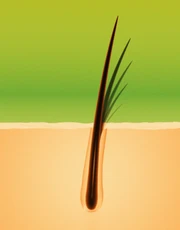
In most hair loss, the follicles survive and hair can regrow. In scarring alopecia, the follicles themselves are damaged beyond repair, and the skin in the affected patches becomes smooth and shiny.
These conditions are uncommon, and they often start quietly: a patch of itching, burning or redness, or hair thinning in one area. That’s why a scalp that keeps flaring up with hair loss should always be checked.
The short answer
Scarring alopecia, also called cicatricial alopecia, is a group of conditions in which inflammation destroys hair follicles and replaces them with scar tissue, so hair can’t grow back in those areas. The commonest types are lichen planopilaris, frontal fibrosing alopecia, discoid lupus and CCCA. Early diagnosis matters, so see your GP or a dermatologist promptly if you notice the signs.
Signs of scarring alopecia
- Patches of hair loss where the skin looks smooth, shiny or paler
- Redness, scale or crusting around the hairs at the edge of a patch
- Itching, burning, tenderness or pain
- Patches that slowly grow larger
Some scarring alopecias are very inflamed and sore; others cause almost no symptoms and are only noticed when a bald patch appears.
Smooth bald patches without redness are more often alopecia areata, where hair can regrow.
See your GP or a dermatologist promptly if a patch of hair loss is spreading, sore or burning, or the skin looks shiny and smooth.
Types of scarring alopecia
Each type behaves differently, which is why an accurate diagnosis comes first.
Lichen planopilaris
An inflammatory condition of the hair follicles that causes itching, burning and patches of hair loss.
Frontal fibrosing alopecia
A form of lichen planopilaris that makes the front hairline recede, often with eyebrow loss.
Discoid lupus
A form of lupus affecting the skin, which can leave scarred patches of hair loss. Sunlight can make it worse.
Central centrifugal cicatricial alopecia
CCCA starts at the crown and spreads outwards, mostly in women of African descent. It isn’t simply caused by hairstyles.
Folliculitis decalvans
A severe form of scalp folliculitis that destroys follicles.
Dissecting cellulitis
Painful, deep lumps on the scalp, most often in young men.
Pseudopelade of Brocq
Pseudopelade of Brocq is a rare, slowly progressive scarring alopecia. It causes small, smooth, irregular patches of hair loss, often on the crown, with very little redness. The patches have been described as looking like footprints in the snow.
Because there’s so little inflammation, it’s easily missed or mistaken for alopecia areata. Many specialists now see it as the late, burnt-out stage of other scarring alopecias, such as lichen planopilaris.
Pseudopelade of Brocq treatment depends on what lies behind it, so a diagnosis comes first. Hair already lost doesn’t regrow, but the condition often progresses slowly, and many people keep most of their hair.

Scarring alopecia diagnosis and treatment
Scarring alopecia is diagnosed by a dermatologist, often with a small skin sample (biopsy) to confirm which type it is.
There’s no single treatment, because each type behaves differently. Hair lost to scarring doesn’t regrow, so the aim is to stop it spreading and to calm symptoms such as itching and burning.
- Get a diagnosis early
- Calm the inflammation
- Protect the hair you have
- Support for how you look and feel
How I can help
Early signs of scarring alopecia are easy to miss. At a consultation in Forest Row we spend about an hour together. I examine your scalp closely with a dermascope, take a full history and listen to how your symptoms have changed.
You leave knowing what’s happening and what to do next. I can also help with scalp comfort and ways to make the most of your hair after your consultation.
Questions about scarring alopecia
If yours isn’t here, send me a message and I’ll get back to you.
Can hair grow back after scarring alopecia?
Not where the follicles have been destroyed. Treatment aims to stop the condition spreading, so the earlier it’s diagnosed, the more hair you keep.
Is scarring alopecia the same as alopecia areata?
No. Alopecia areata doesn’t destroy the follicles, so hair can regrow. Scarring alopecia does, which is why telling them apart early matters.
What does discoid lupus on the scalp look like?
Red, scaly, round patches that can become scarred, with hair loss and sometimes lighter or darker skin. Sunlight often makes it worse.
Is lichen planopilaris serious?
It isn’t dangerous to your health, but it can cause permanent hair loss, so it should be seen by a dermatologist as early as possible.
Do I need a biopsy for scarring alopecia?
Usually, yes. A small biopsy confirms that the hair loss is scarring and shows which type it is.
Let’s find out what’s going on
Book online at a time that suits you. If you have a question first, send me a message.